
Table of Contents
TL;DR:
- Yellowing leaves in succulents have multiple causes, including overwatering, underwatering, pests, and light issues.
- Accurate diagnosis involves checking soil moisture, leaf texture, pests, and light exposure before treatment.
- Preventative care includes consistent watering, proper soil, good lighting, pest inspection, and tailored plant observations.
Over half of gardeners misdiagnose yellowing leaves when their succulents start looking off, and that mistake leads to treatments that make things worse. Most people reach for less water the moment they see yellow, but that reflex is only right about half the time. Yellowing succulents can signal overwatering, underwatering, light stress, pests, or nutrient gaps, and each one needs a completely different fix. This guide walks you through every major cause, shows you how to read your plant’s symptoms accurately, and gives you clear, practical steps to get your succulent looking healthy again.
Key Takeaways
| Point | Details |
|---|---|
| Multiple causes | Yellowing in succulents can result from watering errors, lighting, pests, or nutrients—not just water issues. |
| Diagnose before fixing | Carefully check symptoms and conditions before treating your plant to avoid making the problem worse. |
| Practical solutions work best | Targeted fixes for each cause can quickly restore your succulent’s health. |
| Prevention is key | Consistent care routines dramatically lower the risk of future yellow leaves. |
The main causes of yellowing in succulents
Succulents are famously tough, but that reputation fools a lot of people into thinking yellow leaves are always a watering problem. The truth is that physiological and environmental factors lead to succulent leaf discoloration in several distinct ways, and each one leaves different clues on the plant.
Here are the most common reasons your succulent is turning yellow:
- Overwatering: The most talked-about cause. Roots sit in soggy soil, oxygen gets cut off, and leaves turn soft, mushy, and pale yellow, often starting at the base of the plant.
- Underwatering: Less obvious but just as real. Leaves go thin, wrinkled, and yellow, usually starting at the tips or older leaves near the bottom.
- Nutrient deficiency: Nitrogen is the biggest culprit. A plant running low on it will show uniform yellowing across older leaves while new growth stays green.
- Too much or too little light: Direct harsh sun can bleach leaves to a washed-out yellow. Too little light causes slow, pale yellowing as the plant struggles to photosynthesize.
- Pests: Spider mites, mealybugs, and fungus gnats all damage leaf tissue. Look for tiny dots, webbing, or white cottony clusters alongside the yellowing.
- Root rot or fungal disease: Often a downstream result of overwatering, but it can also come from contaminated soil. Leaves yellow fast and the base of the stem may turn brown and soft.
One myth worth addressing: yellow leaves do not automatically mean you are overwatering. That assumption leads gardeners to withhold water from an already thirsty plant, or to ignore a pest problem entirely. Each cause has its own signature, and reading those signs correctly is what separates a plant that recovers from one that doesn’t.
A common yellowing leaf care mistake is treating the symptom without checking the roots. Roots tell the real story.
Pro Tip: Gently unpot your succulent and look at the roots before doing anything else. Healthy roots are white or light tan and firm. Dark, mushy, or foul-smelling roots mean rot is already underway, and no amount of adjusted watering will fix that without removing the damaged roots first.
How to diagnose the problem
Understanding the causes makes it easier to figure out what is really going on with your succulent. The good news is that 60% of yellowing leaves are due to simple care mistakes, which means most cases are fixable once you know what you are looking at.
Follow these steps to pinpoint the cause:
- Check the soil moisture. Push your finger two inches into the soil. Wet and compacted after a week? Overwatering. Bone dry and pulling away from the pot edges? Underwatering.
- Look at which leaves are yellowing. Bottom leaves going yellow first often means natural aging or underwatering. Yellowing spreading from the center outward suggests rot or disease.
- Feel the texture of the yellow leaves. Mushy and translucent points to overwatering or rot. Thin and papery points to drought stress.
- Inspect for pests. Use a magnifying glass and check the undersides of leaves and the soil surface. Tiny moving dots, webbing, or white fluff are red flags.
- Assess the light situation. Count how many hours of direct sun the plant gets. Bleached yellow near the top means too much. Pale, stretching growth means too little.
Here is a quick reference to match what you see to what it likely means:
| Symptom | Likely cause | What to check next |
|---|---|---|
| Soft, mushy yellow leaves at base | Overwatering or root rot | Check roots for dark, mushy tissue |
| Thin, wrinkled yellow leaves | Underwatering | Soil dryness, last watering date |
| Uniform pale yellow across old leaves | Nutrient deficiency | Fertilizer schedule, soil age |
| Bleached yellow near top of plant | Too much direct sun | Hours of direct sunlight per day |
| Yellow with spots or webbing | Pest infestation | Undersides of leaves, soil surface |
| Rapid yellowing with soft stem | Fungal disease or rot | Stem base and root health |
For yellowing leaves solutions that actually work, your diagnosis has to come first. Skipping this step is how gardeners end up making things worse. If you are also seeing brown tips or edges alongside the yellow, that combination often points to a different issue entirely, and our guide on yellow and brown leaves breaks that down in detail.
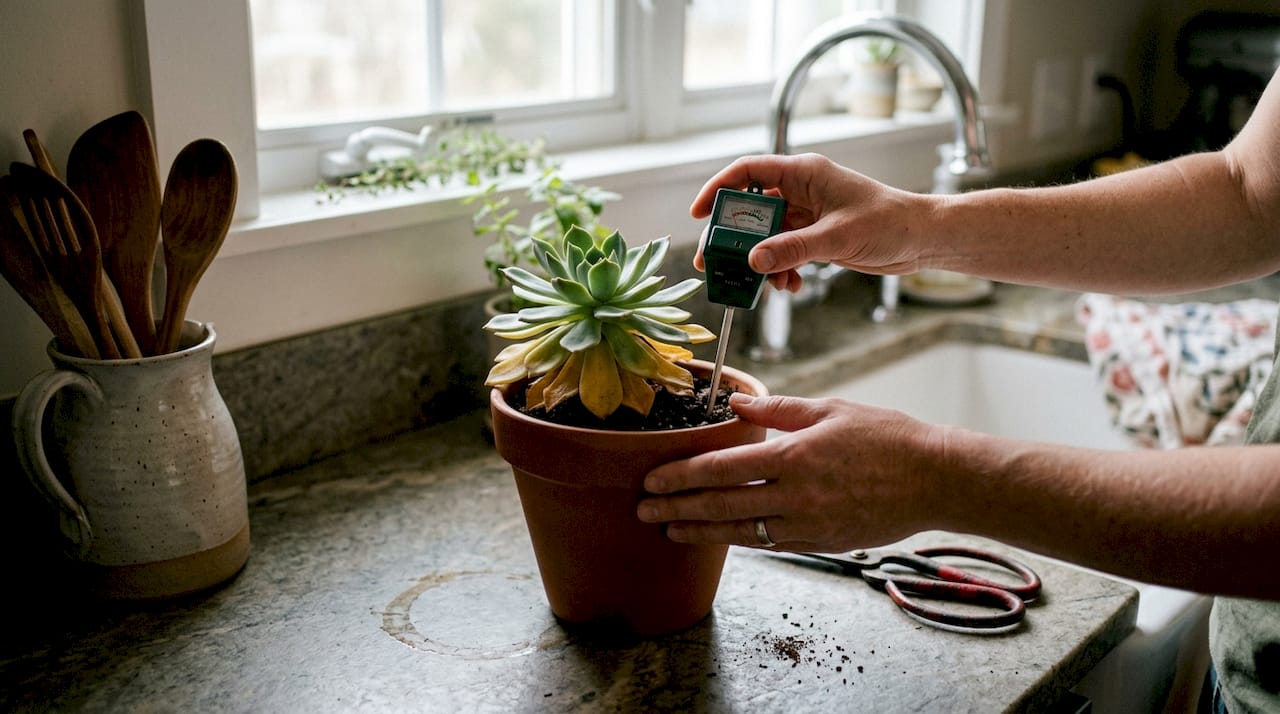
Pro Tip: A cheap moisture meter removes all the guesswork from soil checks. They cost around ten dollars and tell you instantly whether the soil is wet, moist, or dry, which is especially useful for pots where you cannot easily see the drainage.
Best solutions for each type of yellowing
Once you pinpoint the cause, here is how to bring your succulent back to full health. Expert care techniques maintain vibrant succulent foliage and prevent yellow leaves from returning, but the right fix depends entirely on what caused the problem.
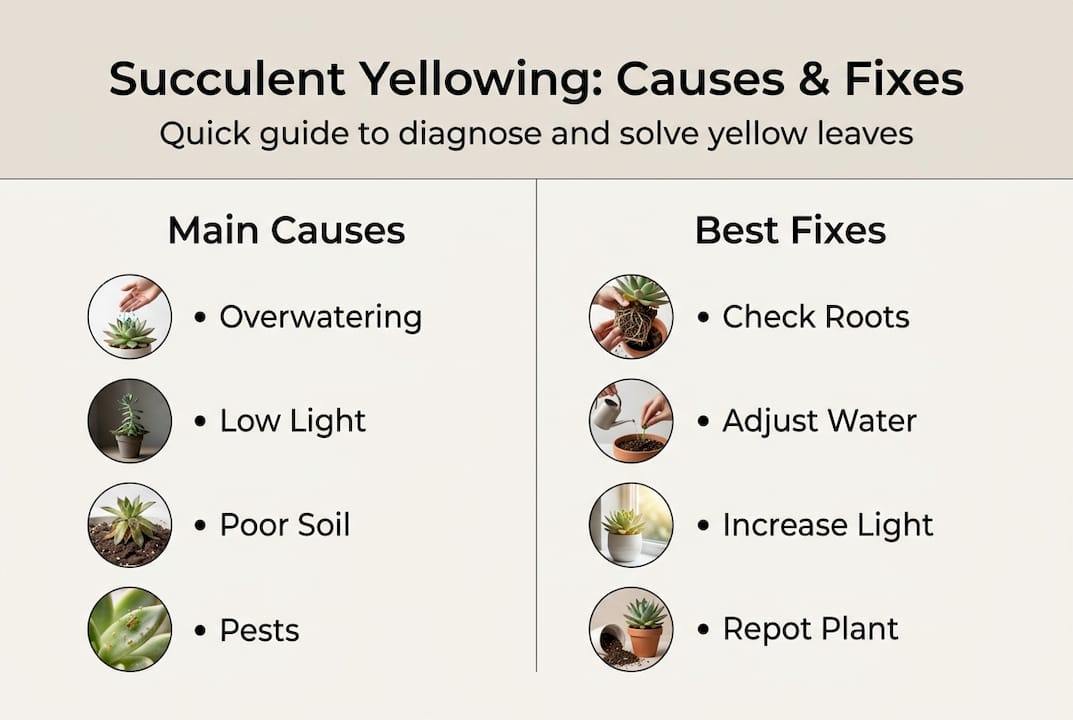
| Cause | Fix | Expected improvement |
|---|---|---|
| Overwatering | Let soil dry fully, repot if roots are rotted | 1 to 3 weeks |
| Underwatering | Water thoroughly, allow full drainage | 3 to 7 days |
| Nutrient deficiency | Apply balanced liquid fertilizer at half strength | 2 to 4 weeks |
| Too much sun | Move to bright indirect light | 1 to 2 weeks |
| Too little light | Relocate or add a grow light | 2 to 4 weeks |
| Pest infestation | Treat with neem oil or isopropyl alcohol | 1 to 2 weeks |
| Root rot or disease | Remove affected roots, repot in fresh dry soil | 2 to 6 weeks |
Here are the most important action points for each fix:
- Overwatering fix: Stop watering immediately. Unpot the plant, trim any black or mushy roots with clean scissors, let the roots air dry for 24 hours, then repot in fresh, well-draining soil. Choosing the right soil for succulents is just as important as how much you water.
- Underwatering fix: Water slowly and deeply until it drains from the bottom. Do not mist. Succulents need a proper soak, not surface moisture.
- Nutrient fix: Use a cactus or succulent fertilizer diluted to half the recommended dose. Fertilize once in spring and once in early summer. Never fertilize a stressed or recently repotted plant.
- Light fix: Move the plant gradually. A sudden shift from low light to full sun will cause sunburn, which looks like bleached patches, not healthy color.
- Pest fix: Wipe leaves with a cotton ball soaked in 70% isopropyl alcohol, then spray with diluted neem oil. Repeat every five days for three weeks.
As for yellow leaves themselves: remove them only if they are fully dead, mushy, or falling off on their own. Pulling off leaves that still have some green can stress the plant. For more on indoor succulent care essentials, including pot size and drainage tips, we have a full guide that goes deeper on setup.
How to prevent yellowing in the future
Now that your succulent is on the mend, here is how to keep it thriving. Prevention is mostly about building consistent habits and paying attention to your plant’s signals before they become serious problems.
These five habits make the biggest difference:
- Water on a schedule, not by feel alone. Check soil moisture before every watering. In summer, most succulents need water every 7 to 14 days. In winter, stretch that to once a month or less.
- Use the right soil from the start. Standard potting mix holds too much moisture. A well-draining succulent soil mix prevents the root conditions that lead to rot and yellowing.
- Audit your light setup every season. Windows shift with the sun’s angle throughout the year. A spot that worked in summer may be too dim by November.
- Inspect for pests monthly. A quick look at the undersides of leaves and the soil surface takes two minutes and catches infestations before they spread.
- Fertilize lightly and seasonally. Succulents are light feeders. Over-fertilizing burns roots and causes yellowing just as surely as overwatering does.
Many indoor succulent problems trace back to light, not water. Sunlight and grow light management are among the most overlooked factors in preventing yellowing, especially in homes with limited natural light.
Pro Tip: Before yellowing starts, light stress shows up as color changes. A succulent getting too much sun will start to blush red or orange at the tips. One getting too little will stretch its stem and space out its leaves, reaching toward any available light. Catching these early signs saves you from dealing with full yellowing later.
Why most succulent care advice misses the mark
Here is something worth saying plainly: most succulent guides online are written around a single plant in ideal conditions. They give you a watering schedule, a light recommendation, and call it done. But your succulent is living in your home, in your pot, in your soil mix, and none of those variables are the same as anyone else’s.
Generic watering rules fail because they ignore pot size, soil composition, humidity, and the age of the plant. A small terracotta pot in a dry climate needs water far more often than a glazed ceramic pot in a humid apartment, even if both hold the same plant. Following a fixed schedule without accounting for those factors is one of the most common yellowing leaf mistakes we see.
Light and soil matter more than most guides admit. A succulent in poor-draining soil will yellow no matter how carefully you water it. And a plant with the wrong genetics for your light conditions will always struggle, no matter what you do. Some varieties simply need more sun than a north-facing window can offer.
The honest approach is to treat your plant as an individual. Observe it weekly. Learn what healthy looks like for that specific plant. Adjust one variable at a time so you can actually tell what is working. That patience and attention is what long-term succulent health actually requires.
Take your indoor plant skills to the next level
If your succulent is recovering but you want to build a stronger foundation for all your indoor plants, Lushy Gardens has the resources to get you there. Our indoor plant troubleshooting guide covers a wide range of common issues beyond yellowing, from root problems to pest management, with clear steps for each scenario. If you are newer to plant care overall, the gardening basics guide is a great place to build confidence from the ground up. And for everything specific to keeping indoor plants thriving year-round, our indoor plant care basics guide pulls together the essentials in one place. Your plants deserve care that actually fits their needs.
Frequently asked questions
Is yellowing always a sign of overwatering in succulents?
No, yellowing can result from overwatering, underwatering, poor light, pests, or nutrient issues. Multiple environmental factors cause leaf discoloration, so always check the full picture before adjusting your watering.
Should I remove all yellow leaves from my succulent?
Remove yellow leaves only if they are fully dead or mushy, as light yellowing can sometimes be reversed. Yellow leaves from care mistakes sometimes recover once you correct the underlying problem.
How can I prevent my succulent from turning yellow again?
Maintain consistent watering, proper lighting, and routinely check for pests or soil issues. Following expert succulent care practices keeps foliage vibrant and reduces the risk of repeat yellowing.
Can yellow succulent leaves turn green again?
Mild yellowing may reverse if the cause is corrected early, but severely damaged leaves usually will not recover. Some yellowing leaves do bounce back with prompt treatment, but fully dead tissue is permanent.
Recommended
- Why Plant Leaves Turn Yellow—Causes and Solutions – Lushy Gardens
- Why Is My Plant Turning Yellow and Brown? – Lushy Gardens
- Why Plants Turn Yellow: Common Causes and Easy Fixes – Lushy Gardens
- Why Are My Plants Leaves Turning Yellow? Solutions That Work – Lushy Gardens

I’m Eleanor, a seasoned gardener with over three decades of experience tending to Mother Nature’s creations. Through Lushy Gardens, I aim to share my wealth of knowledge and help fellow plant enthusiasts uncover the wonders of gardening. Let’s dive into this journey together, one leaf at a time.


